
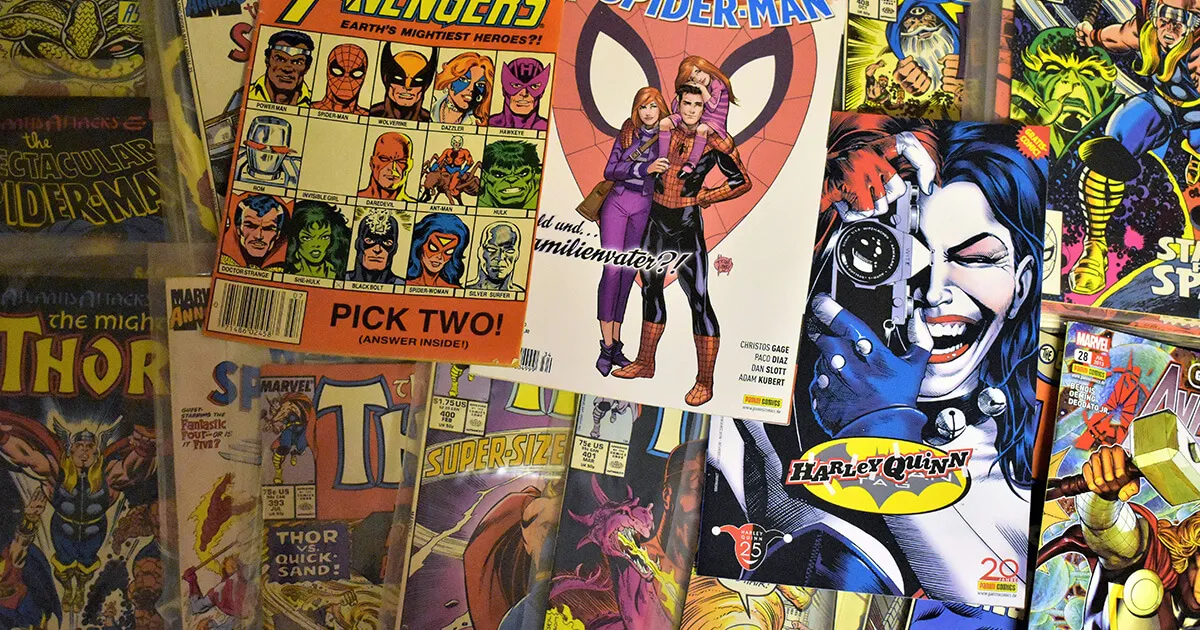
Ask any Brazilian about Mônica, Cebolinha, Cascão, and Magali, and you're not asking about a comic — you're asking about their childhood. Mauricio de Sousa's Turma da Mônica (Mônica's Gang) has been running since 1959, has sold over a billion copies, and holds a place in Brazilian culture that has no real equivalent anywhere: part Disney, part national institution, part family member.
A country in four characters
The gang from Limoeiro street is a map of Brazilian everyday life in miniature. Mônica, the short-tempered leader with the plush rabbit; Cebolinha, who swaps his Rs for Ls ("Vamos blincar!" — a running gag that incidentally teaches you correct pronunciation by showing you its opposite); Cascão, who fears water; Magali, who eats everything. Their small dramas — playground politics, street football, watermelon theft — happen in the warm, direct register of Brazilian family life.
That register is the treasure. Turma da Mônica dialogue is how Brazilians talk at home: diminutives everywhere (um pouquinho, bonitinho), exclamations, food vocabulary, the gentle teasing that structures Brazilian friendship. It's the filler-word-rich, rhythm-first Portuguese that textbooks flatten out — served in four-panel doses an A2 learner can actually finish, which is most of the battle.
Chico Bento: the dialect lesson nobody assigns
The Mônica universe hides a genuine linguistic gift: Chico Bento, the gang's country cousin. His strips are written in caipira — the rural dialect of the Brazilian interior — with its own spellings: ocê for você, nóis for nós, muié for mulher.
For a learner this is quietly brilliant: a picture-anchored, affectionate introduction to the fact that Brazilian Portuguese varies — and to exactly how it varies, because the deviations are printed right next to the standard forms in the other characters' speech. São Paulo executives still quote Chico Bento; the dialect carries warmth, not stigma. Reading him at B1 is like getting the regional-variation lecture as a bedtime story.
And when you outgrow the playground
The natural next step is O Menino Maluquinho — Ziraldo's "nutty boy," the other pillar of Brazilian children's literature, wordier and more poetic. From there, Brazilian newspaper strips and graphic novels open up. But most learners underestimate how far the Mônica universe alone carries you: Mauricio's studio publishes Turma da Mônica Jovem (the gang as teenagers, manga-style), which walks the same characters into teenage register — slang, romance, school stress — effectively graduating with you.
The capture habit
Brazilian Portuguese lives on diminutives, interjections, and food words — precisely the vocabulary that evaporates if you only recognize it. As you read, save the words that feel warm — jeitinho, saudade, bagunça — into Vokabulo with their situation. The AI wraps each one in a natural example at your level, and spaced repetition brings it back before it fades. A childhood's worth of Portuguese, kept.
Reading the Turma this week? Save the diminutives that make you smile — Vokabulo turns them into vocabulary that stays. Free to start.