

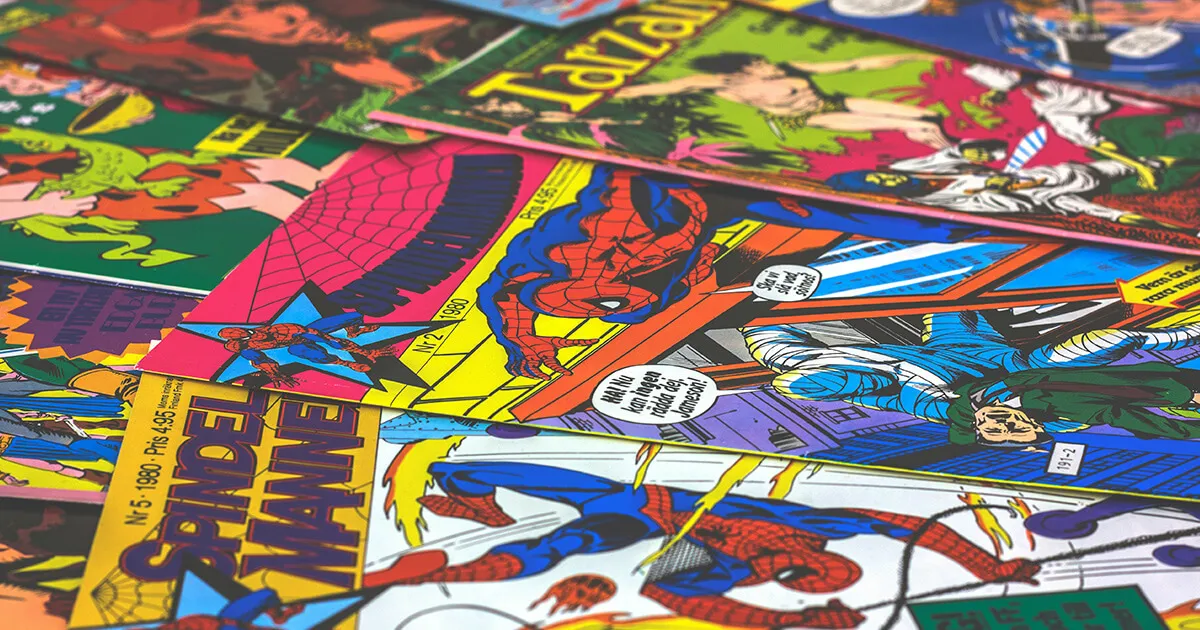
Spanish has a problem no other major learning language has quite so sharply: it's one language wearing twenty flags. And no pair of books explains the two biggest worlds of Spanish better than a six-year-old girl from Buenos Aires and two catastrophic secret agents from Madrid.
Mafalda: Latin America's conscience, in daily strips
Between 1964 and 1973, the Argentine cartoonist Quino drew a small girl who hated soup and asked her parents why humanity was doing such a poor job. Mafalda became the most beloved comic character in the Spanish-speaking world — quoted by presidents, translated into thirty languages, praised by Umberto Eco. In Buenos Aires, tourists queue to sit next to her statue.
For learners, Mafalda is a triple lesson. First, the Spanish itself: everyday household vocabulary, but sharpened by irony — you need B1 to catch why a line is funny, which makes every laugh a comprehension test you want to pass. Second, the voseo: Mafalda says vos tenés, not tú tienes — your painless introduction to Rioplatense Spanish, which textbooks mention in a footnote and forty million people speak daily. Third, the culture: her strips are a time capsule of Latin American middle-class life — inflation, the Beatles, the Cold War — that still shapes how the region talks about itself.
Mortadelo y Filemón: Spain at full volume
On the other shore, Francisco Ibáñez created Spain's most successful comic: two hopeless secret agents whose missions end in explosions, disguises, and their boss's fury. Mortadelo y Filemón has sold hundreds of millions of copies since 1958; every Spaniard alive grew up with it.
The register is the opposite of Mafalda's quiet irony: pure peninsular Spanish at maximum speed. Exclamations on every panel (¡Recórcholis!), affectionate insults, chase-scene vocabulary, and the wordplay-dense humor Spain loves. The slapstick is so visual that you can follow the plot at B1 even when an idiom is new — the falling anvil explains the sentence above it. This is where you absorb the ustedes/vosotros line in practice, along with a hundred expressions no vocabulary list carries.
One warning that doubles as a lesson: some vocabulary differs dangerously between the two worlds — Mafalda and Mortadelo will occasionally use the same word to mean different things, which is the comic-strip version of the false-friends problem. Meeting these differences with pictures attached is the safest way to learn them.
Read both — that's the trick
Most learners pick a side: Spain or Latin America. Reading one comic from each is the gentler path — your ear learns both registers in parallel, anchored by images, and you'll never be the person who lands in Mexico asking about vosotros. Same language, two worlds, and the differences arrive as entertainment instead of as errata.
From panels to permanent vocabulary
The method doesn't change from the comics playbook: read with your phone beside the album, and when a word earns a smile — Mafalda will make you underline whole sentences — save it to Vokabulo with its situation. The AI adds a natural example at your level, and spaced repetition returns it before it fades. Vos tenés a system now.
Reading Mafalda this month? Save the lines that sting a little — context makes them stick. Vokabulo is free to start.