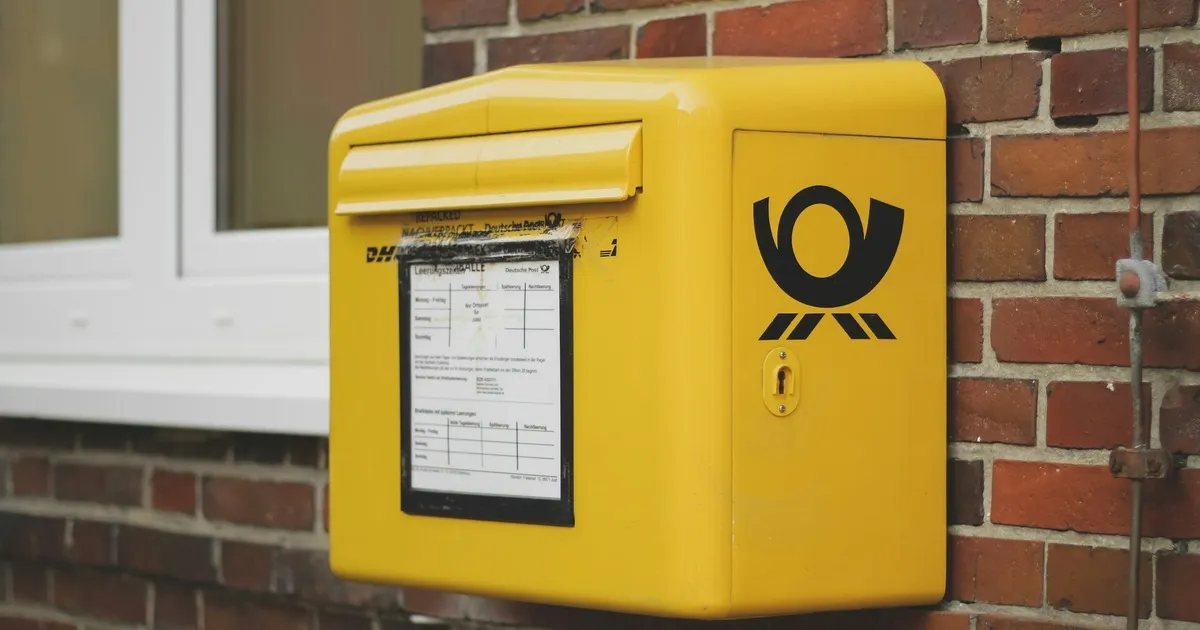
Germans receive a great many parcels, and the delivery system runs on conventions that nobody explains to newcomers. Two of them cause most of the confusion.
Convention one: your neighbour has it
der Nachbar: the neighbour, and in German delivery practice a perfectly legitimate recipient of your parcel.
A courier who finds you out may leave the parcel with a neighbour without asking you first. This is normal, it is allowed under the carriers’ terms, and it does not mean the courier was careless. The delivery counts as completed. If you would rather it did not happen, DHL lets you switch neighbour delivery off in your customer account.
die Benachrichtigungskarte: the notification card left in your letterbox. It says where the parcel went and, if a neighbour took it, which flat.
Two things follow. Put your name on your letterbox and on your doorbell, clearly, because a courier who cannot identify your flat will not leave anything. And read the card before deciding the parcel is lost, because it usually is not.
der Ablageort: the drop-off place you have chosen, if you have chosen one.
die Abstellgenehmigung: written permission for the courier to leave parcels in a particular spot, such as behind the bins or with the caretaker. Most carriers let you grant this online, and it removes the problem entirely.
Convention two: the locker
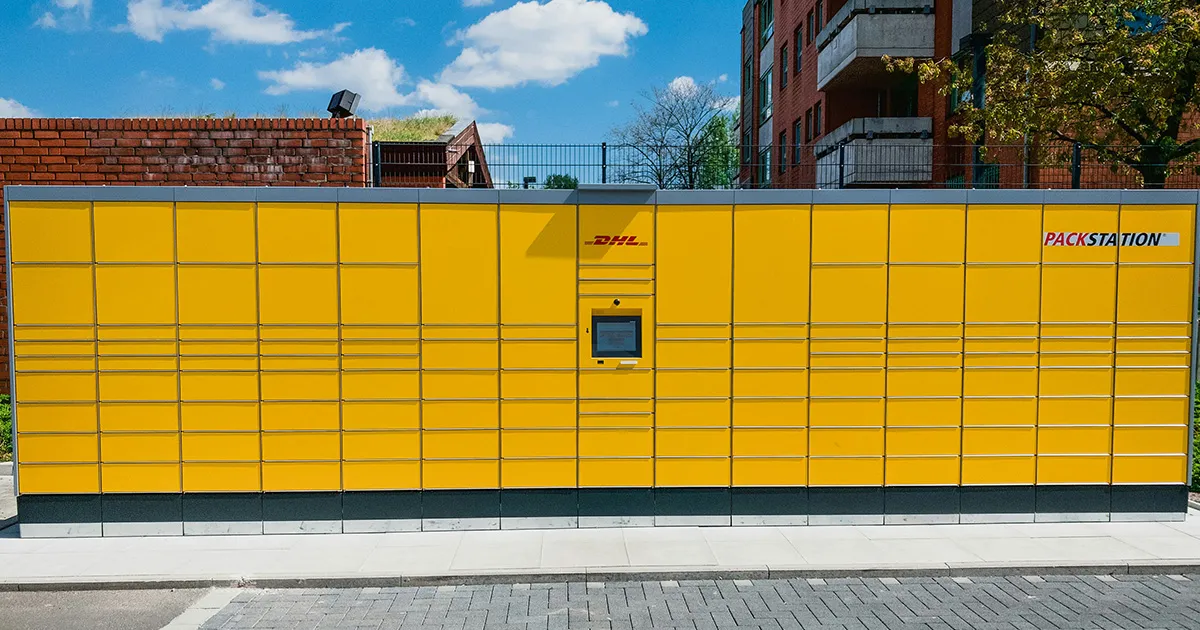
die Packstation: DHL’s automated parcel locker. Open at all hours, found outside supermarkets and stations, and free to use.
You register once, get a Postnummer, and can then have parcels sent to a Packstation instead of your flat. You collect them with the app or a code. For anyone who works during the day, this is the most useful thing in this article.
die Postnummer: your Packstation customer number. Without it, nothing can be sent to a Packstation.
die Filiale: a branch, either a proper post office or a counter inside a shop.
die Postfiliale: a Deutsche Post branch, which is where parcels that could not be delivered usually end up.
die Abholfrist: the collection deadline. Usually about a week, after which the parcel goes back. It is printed on the card and worth noticing.
die Sendungsverfolgung: tracking.
die Sendungsnummer: the tracking number.
der Empfänger: the recipient.
der Absender: the sender.
die Nachforschung: a formal trace request, for when something really has disappeared.
The customs letter
der Zoll: customs.
das Zollamt: the customs office.
Anything arriving from outside the EU has to clear customs. Usually the carrier does this for you: the parcel arrives, and you pay the import charges, plus a handling fee, to the courier or at the branch. If you bought through a large online platform that charged VAT at checkout, there is nothing more to pay. Only when the paperwork is missing or unclear is the parcel sent to a customs office, and then what reaches your flat is not the parcel but a letter.
die Zollbenachrichtigung: the customs notification. It tells you the parcel is being held and what you need to provide.
die Einfuhrumsatzsteuer: import VAT. This now applies to almost everything. The old exemption for low-value consignments was abolished across the EU in July 2021, so even a cheap item from outside the EU attracts VAT.
der Zoll in the narrow sense, customs duty, used to apply only above €150. Since July 2026, online orders below that value carry a flat duty of €3 per type of item, and above it the normal rate for the product applies.
die Rechnung: the invoice. This is what customs want to see. Without proof of what you paid, they will estimate the value, and not generously.
das Geschenk: a gift. Genuine gifts between private individuals are free of import charges up to a value of €45, and the sender must declare the parcel as a gift. A parent posting a birthday present from outside the EU should mark it accordingly.
die Zollinhaltserklärung: the customs declaration form, CN22 or CN23, which the sender fills in. If the contents are described vaguely or the value is left blank, your parcel will sit and wait.
die Verzollung: customs clearance.
die Auslagepauschale: the handling fee a carrier charges for clearing the parcel on your behalf, €7.50 at Deutsche Post. It comes on top of the tax itself and can be more than the tax on cheap items.
What to actually do
Put your name on the letterbox and the doorbell. More parcels go astray for lack of a name than for any other reason.
Set up an Abstellgenehmigung or register for a Packstation, or both.
When a customs letter arrives, act promptly. There is a deadline, and an unclaimed parcel goes back to the sender.
Have the invoice ready before you go to the Zollamt, and if the item was a gift, be ready to say so.
The phrases
Ich möchte ein Paket abholen. I would like to collect a parcel.
Hier ist meine Benachrichtigungskarte. Here is my notification card.
Das ist ein Geschenk, keine Bestellung. This is a gift, not something I ordered.
Ich habe die Rechnung dabei. I have the invoice with me.
Where this fits
Talking to the neighbour who has your parcel is a small social exercise of its own, and the vocabulary for it is in the article on German neighbours.
Learning the vocabulary
Save each object with its situation. Benachrichtigungskarte translates as notification card. Saved as the slip that tells me which neighbour has my parcel, it is something you will actually read next time.
Put the Zoll letter into Translate whole. It states a deadline and a list of what to bring, and both are easy to miss.
Then let spaced repetition hold it. These twenty words come up constantly once you start ordering things.
The short version
Put your name on the letterbox. Read the Benachrichtigungskarte before assuming the parcel is lost. Register for a Packstation if you are out during the day.
And when the Zoll writes, take the invoice with you.
Got a card or a customs letter you cannot read? Put it into Vokabulo. Free to start on iPhone, iPad and in the browser. 📦