
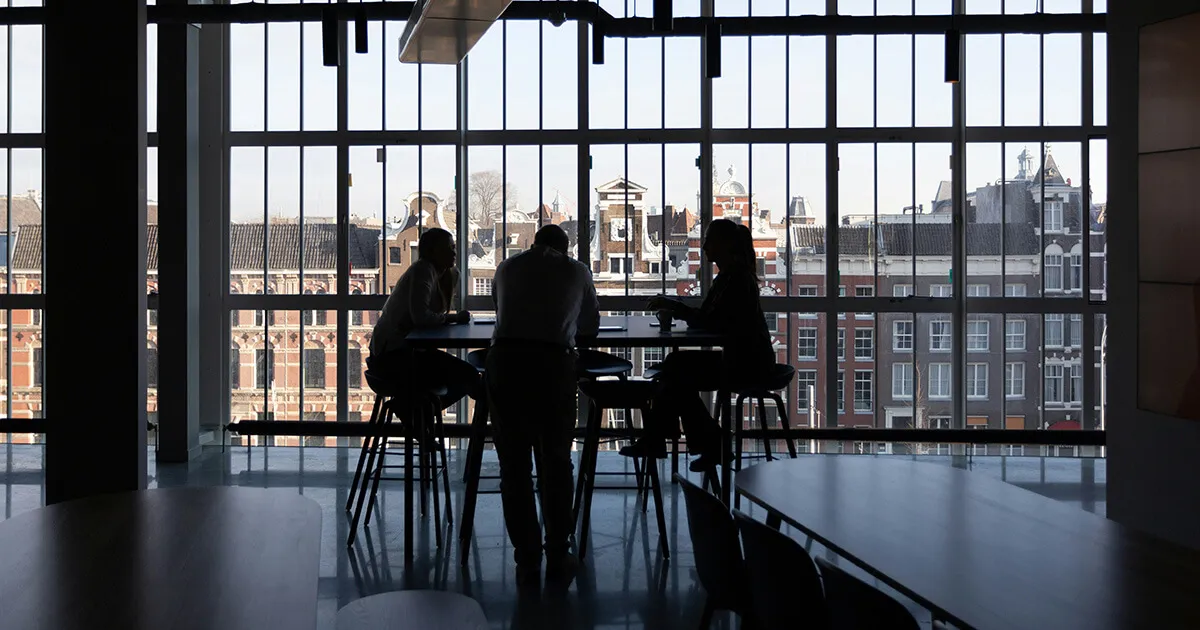
Working in a Dutch company is a cultural adjustment that surprises even experienced international professionals. The hierarchy is flat, the communication is direct to the point of bluntness, and the meeting culture is built around overleg — consultation and consensus — in ways that can feel slow but rarely result in decisions being reversed.
Here is the vocabulary for Dutch business meetings: what things are called, what phrases you'll hear, and what the cultural norms are that sit behind the language.
Meeting Types
Vergadering: a meeting. The general term.
Overleg: consultation, deliberation. Often used for meetings whose purpose is alignment rather than decision. "We moeten even overleggen." — We need to talk / consult on this.
Teamoverleg: team meeting.
Afdelingsoverleg: department meeting.
Directievergadering: management/board meeting.
Aandeelhoudersvergadering: shareholders' meeting.
Brainstorm: used directly from English; a brainstorming session.
Stand-up: also used directly; a brief daily update meeting, common in tech companies.
1-op-1: a one-on-one meeting.
Werkoverleg: a working group / operational discussion.
Heidag: a company offsite day (literally: "heath day"); a strategic planning day or team day, often held outside the office.
Structure and Process
Agenda: agenda. "Staat dat op de agenda?" — Is that on the agenda?
Agendapunt: agenda item.
Notulen: minutes. "Wie maakt de notulen?" — Who is taking the minutes?
Notulist/notuliste: the person taking minutes.
Actiepunten: action points. Typically listed at the end of Dutch meetings with a responsible person (eigenaar) and a deadline (deadline).
Eigenaar: owner (of an action point or project).
Deadline: used in Dutch exactly as in English.
Verslag: report / meeting record. Sometimes used interchangeably with notulen.
Terugkoppeling: feedback / follow-up. "Ik geef volgende week terugkoppeling." — I'll give an update / feedback next week.
Besluit: a decision. "Is er een besluit genomen?" — Was a decision made?
Consensus: consensus. Dutch meeting culture prizes arriving at consensus rather than majority voting; decisions reached without full agreement may be revisited.
Poldermodel: the distinctive Dutch approach to consultation and compromise across different interest groups. In business, it manifests as lengthy consultation before action. Understanding this explains why decisions take longer but stick better.
Useful Phrases
"Mag ik even het woord?" — May I have the floor?
"Ik wil dit punt toelichten." — I'd like to elaborate on this point.
"Ik ben het er niet mee eens." — I disagree. (Said directly and without awkwardness in Dutch culture.)
"Waar staan we nu?" — Where do we stand now?
"Wat is de volgende stap?" — What is the next step?
"Wie pakt dit op?" — Who picks this up / takes ownership?
"Ik zet dit in de notulen." — I'll put this in the minutes.
"We ronden dit punt af." — Let's close this item.
"Even checken: zijn we het hierover eens?" — Quick check: are we agreed on this?
"Dit leg ik voor aan de directie." — I'll put this to management.
Communication Culture
A few terms and concepts that explain Dutch business communication:
Directheid: directness. Dutch professionals communicate directly about disagreement, concerns, and criticism in ways that feel blunt to many international colleagues. This is a cultural norm, not hostility. Responding with equal directness is respected.
Feedback: used as in English, but given more freely and publicly in Dutch workplaces than in many cultures.
Speelveld: playing field / scope. "Wat is ons speelveld?" — What is our scope / what are we working with?
Draagvlak: support / buy-in. One of the most important concepts in Dutch workplace culture. "We moeten draagvlak creëren." — We need to build buy-in. A decision that lacks draagvlak among the team will be challenged, delayed, or ignored. Building draagvlak before announcing a decision is expected, not optional.
Verantwoordelijkheid: responsibility.
Eigenaarschap: ownership (of a task or project). Dutch managers expect clear eigenaarschap — someone who takes responsibility and drives something forward.
Zelfstandigheid: independence / autonomy. Dutch workplaces tend to give employees significant autonomy; being proactively independent is expected.
Aanpakken: to tackle, to get on with something. "We moeten dit gewoon aanpakken." — We just need to get this done. A highly valued quality.
The Dutch language and business culture reward directness and preparation in equal measure. Know the vocabulary for the meeting before the meeting starts, and you'll be in the room rather than just present in it.
Dutch business vocabulary is specific — and Vokabulo is built for exactly this kind of specificity. Build the words for your work context before the next vergadering. Available on iPhone and iPad.