
The standard joke is that an Italian with their hands tied cannot speak. Like most standard jokes it is roughly true and entirely unhelpful.
What nobody tells learners is that Italian gestures are not decoration or emphasis. They are lexical. Each one stands in for a specific phrase, the way a word stands in for a meaning, and they can be learned the same way: as vocabulary with a form and a sense.
Here are the ones that carry the most traffic, each paired with the phrase it replaces.
The famous one
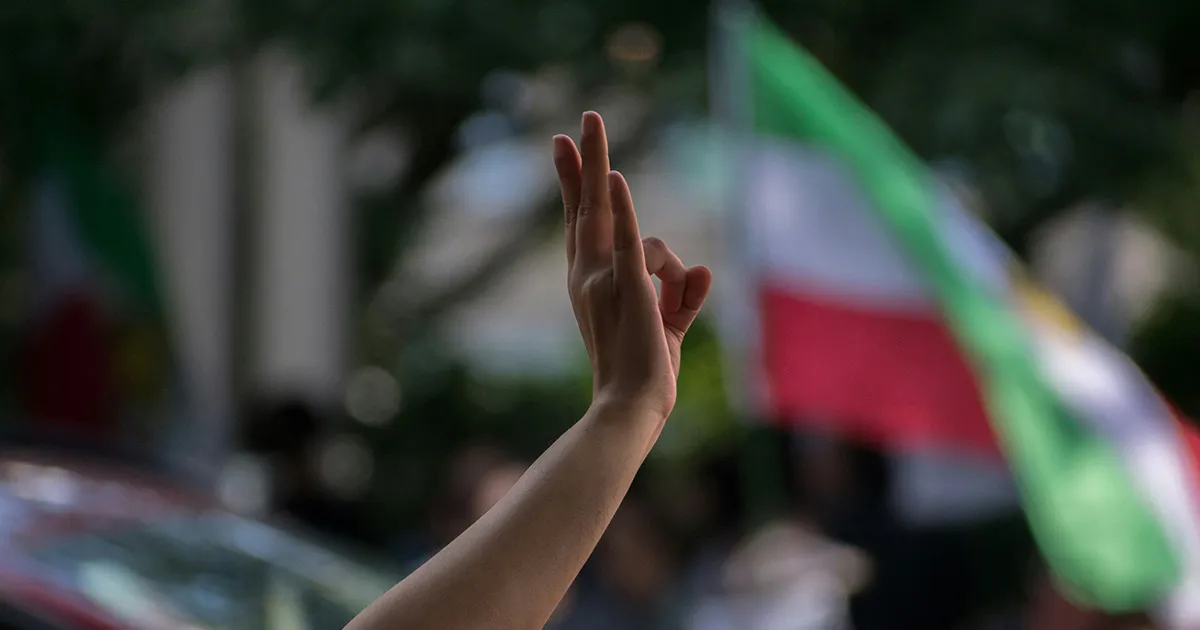
Che vuoi?: fingertips pinched together, hand pointing upward, moving at the wrist. The gesture the whole world now knows from the internet, and almost nobody outside Italy knows the meaning of. It is a question: what do you want, what are you on about, what is it you are trying to say. Exasperated, playful or genuinely confused depending on the eyebrows. It is not an insult and not a threat.
The ones that replace a whole sentence
Boh: shoulders up, palms out, corners of the mouth down. Said aloud as boh, or performed silently. It means I have no idea, and unlike the English shrug it is a complete and acceptable answer to a direct question.
Ma dai!: hand or hands moving outward, often with a tilt of the head. Come on, get out of here, you're joking. Warm, and usually accompanied by the words.
Ma va'!: a sharper version of the same, dismissive rather than delighted. Go on, nonsense.
Aspetta: palm raised, fingers together, a small patting motion. Hold on, wait a second. Used constantly in conversation to hold the floor, which is the part learners miss: it is a turn-taking device, not just a request.
Buonissimo: index finger pressed into the cheek and twisted. Delicious. Reserved for food and used with genuine enthusiasm.
Furbo: index finger pulling down the skin under one eye. He is sly, or watch out, that one is clever. Can be admiring or a warning depending on who it is aimed at.
Andiamo: fingers of one hand held together, hand swept in the direction of travel. Let's go, we are leaving now.
Ho fame: hand flat, moving across the stomach. I am starving. Often accompanied by the words and always understood without them.
Basta: both hands raised, palms out, a short chopping motion. Enough. Firm rather than aggressive.
The two to recognise and not perform
Both of these are common, both are worth understanding, and neither belongs in a foreigner's repertoire.
Le corna: index and little finger extended, the other fingers folded. This gesture has two entirely different jobs depending on direction. Pointed downward, it wards off bad luck, which is scaramanzia, the superstition apparatus that runs quietly under a great deal of Italian life. Pointed at a person, it says their partner is cheating on them, which is an accusation rather than a joke. The distinction is real and the second sense is not one to experiment with.
The chin flick: backs of the fingers brushed forward from under the chin. Dismissive, roughly I could not care less about you or what you said. It reads as rude across most of Italy. Recognise it, do not use it.
Why this belongs in a vocabulary app
Because it is vocabulary. A gesture with a fixed form and a fixed meaning behaves exactly like a word: it has a register, it has regional variation, it can be used wrongly, and it can be learned deliberately rather than absorbed over years.
It is also the fastest way to understand fast speech. When someone is talking at full speed, the gesture arrives slightly before the phrase and tells you what shape the sentence is going to be. Learners who watch hands follow Italian conversation noticeably better than learners who only listen, which is the same reason comics and subtitled series work so well: the visual channel carries meaning the audio channel is delivering too fast.
The verbal ones worth having alongside
Some Italian phrases work like gestures: fixed, formulaic and used constantly.
In bocca al lupo: good luck, literally into the mouth of the wolf. The required answer is crepi, may it die. Saying grazie instead marks you as a foreigner more clearly than any accent.
Magari: if only, or maybe, depending entirely on intonation. A whole hope compressed into three syllables.
Meno male: thank goodness. Literally less bad, which tells you something about the outlook behind it.
Figurati: don't mention it, no trouble at all. The informal reply to thanks, with si figuri as the formal version.
How to actually learn them
Gestures resist word lists for the obvious reason: a list cannot show a hand.
Save the phrase, and describe the hand. The gesture is the trigger and the phrase is the content, so record them together. Che vuoi, fingers pinched pointing up, made by the waiter when I asked for ketchup is a complete memory. Vokabulo Scenes hold that pairing, and a free account includes three.
Give Translate the sentence that came with it. Gestures almost always accompany speech rather than replacing it. Capture the words and the gesture attaches itself.
Then watch hands deliberately for a week. Not to imitate, at first, but to notice how systematic it is. Once you see the same eight gestures repeating, they stop being atmosphere and start being a closed vocabulary set, which is a thing you already know how to learn.
This sits alongside the pronunciation traps that catch every Italian learner, which are about the mouth rather than the hands.
The short version
Learn che vuoi first, because you already know the gesture and have never known the phrase. Learn boh second, because it will save you a hundred times.
Leave le corna and the chin flick to the natives. Watch the hands, and Italian gets faster to follow within a week.
Saw a gesture you could not read? Describe it in Vokabulo alongside what was said and keep the pair. Free to start on iPhone and iPad. 🇮🇹