German energy supply has a default setting that costs newcomers real money: do nothing, and you pay one of the highest prices available.
The mechanism
When you move into a German flat, the electricity is already on. Nobody asks you to arrange it first.
die Grundversorgung: basic supply. In each area, the supplier with the most household customers is designated the default supplier, and it has to supply anyone who has not arranged anything else, so that no home is ever without power.
der Grundversorger: that supplier, usually the municipal utility, die Stadtwerke.
The obligation protects consumers. Its tariff, however, is a fallback rather than a competitive offer, and it is usually well above what you would pay on a contract you chose. If you moved in and did nothing, you are on it now.
Checking takes a minute: look at any bill or letter from an energy company. If it says Grundversorgung or Grundversorgungstarif, that is where you are.
The words on the contract
der Stromanbieter: the electricity supplier. der Gasanbieter: the gas supplier. They can be, and often are, different companies.
der Netzbetreiber: the grid operator, who owns the cables and usually runs the meter too. You cannot choose this one, and you do not need to: it stays the same whichever supplier you pick, which is why switching carries so little risk. A change of contract cannot cut off the physical supply.
der Arbeitspreis: the unit price, per kilowatt hour.
der Grundpreis: the standing charge, a fixed monthly amount however much you use.
der Abschlag / die Abschlagszahlung: your monthly payment on account. An estimate, not your actual consumption.
die Jahresabrechnung: the annual statement, which compares your real consumption with what you paid. It works like the Nebenkostenabrechnung and brings the same yearly moment of truth.
die Nachzahlung / das Guthaben: the shortfall and the credit.
die Preisgarantie: a price guarantee for a stated period. Check what it actually covers, because it often excludes taxes and levies.
der Neukundenbonus: the new-customer bonus, a discount in the first year. It is the reason some households switch supplier every year.
The meter
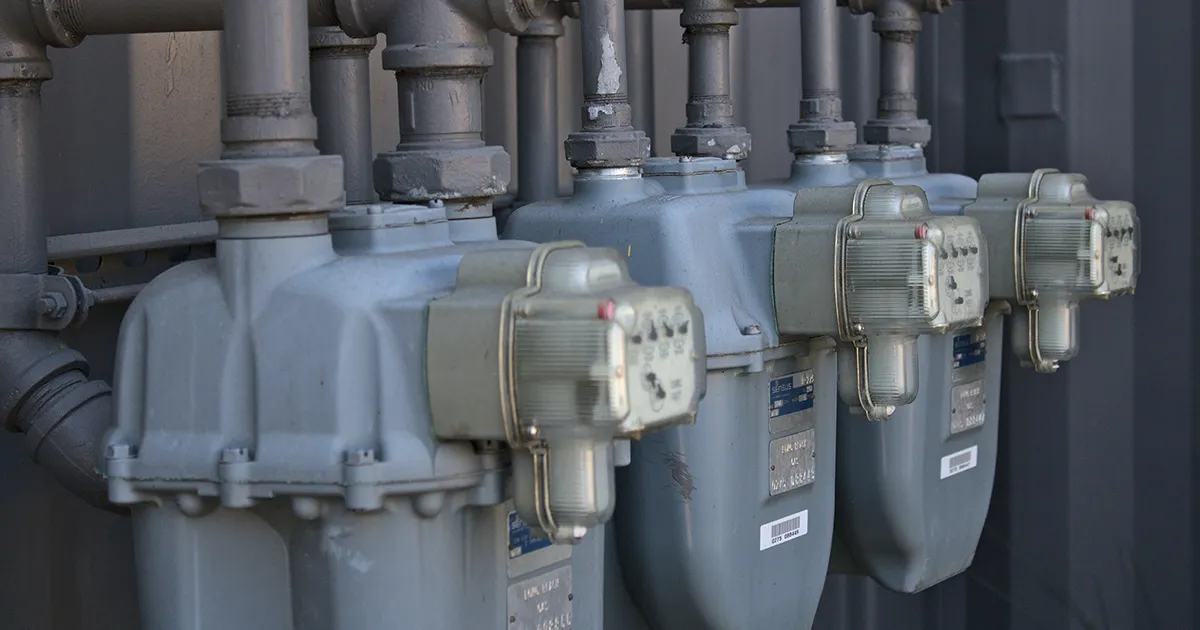
der Zähler: the meter. die Zählernummer: its number, which every supplier asks for and which is printed on the meter itself.
der Zählerstand: the reading. die Ablesung: taking it.
Photograph the meter on the day you move in and the day you move out. It is the most useful habit in this article. Disputes about opening and closing readings are common and cost real money, and a dated photo showing the meter number and the reading settles them at once.
Switching, which is easier than it sounds
der Anbieterwechsel: changing supplier.
The new supplier handles it. You do not contact the old one, you do not arrange anything with the grid operator, and the power does not go off. The physical supply is the grid operator’s job and is not affected.
die Kündigungsfrist: the notice period in your current contract. On the Grundversorgung tariff it is only two weeks.
das Sonderkündigungsrecht: the special right of termination. This is the lever worth knowing. When your supplier raises the price, you may leave without notice, with effect from the day the increase applies. Household customers must be told at least a month in advance, and the letter announcing the rise is legally required to mention this right. It is usually the paragraph people skip.
die Preisanpassung: the price adjustment, which is what that letter will be headed.
Adjusting the Abschlag
If your monthly payment is far above or below your real use, you can ask for it to be changed rather than waiting a year for the settlement.
Ich möchte meinen Abschlag anpassen lassen. I would like my monthly payment adjusted.
Suppliers generally do this without argument. If you are clearly in credit, lowering it keeps the money in your account instead of theirs for a year.
Moving in and moving out
When you arrive: read the meter, photograph it, and register with a supplier, either the Grundversorger to start with or one you have chosen.
die Anmeldung with the supplier has nothing to do with your address Anmeldung at the Bürgeramt, despite the shared word.
When you leave: read the meter, photograph it, give the final reading and your forwarding address, and end the contract. This belongs with the rest of the moving-out checklist.
Learning the vocabulary
Save each term with what it decides. Sonderkündigungsrecht is just a long compound noun. Saved as the right to leave when they raise the price, stated in the letter I nearly threw away, it becomes something you act on.
Put the Preisanpassung letter into Translate whole. Your right to leave is in there somewhere, and never in the headline.
Then let spaced repetition hold it. You meet these twenty words once or twice a year, exactly the interval at which memory lets go.
The short version
Check whether you are on the Grundversorgung, because if you did nothing, you are. The Abschlag is an estimate, not a bill. Photograph the Zähler when you arrive and when you leave.
And when a letter announcing a price rise arrives, read it to the end. Your right to leave is in there.
Got an energy letter with a deadline buried in it? Put it into Vokabulo. Free to start on iPhone, iPad and in the browser. 💡