
Croatia runs on a single number. The OIB, the personal identification number, is what you need for the rental contract, the bank account, the electricity supply, registering a car and seeing a doctor. It is the first errand, before anything else at all, and you apply for it at the Porezna uprava, the tax administration.
The second errand takes you to the police. Croatia has no separate immigration office for this: residence is registered at the policijska uprava, the police administration, whoever you happen to be. What differs is what you walk out with. If you hold an EU passport you are registering a right you already have, and the paper you receive is the registration certificate, the potvrda o prijavi boravka. If you do not, which since Brexit includes British citizens and has always included Americans and other third-country nationals, you are applying instead for privremeni boravak, temporary residence, granted on a stated ground and carrying a distinctly longer list of documents. Same building, same counter, different form.
Both errands are short if you arrive with the right paper and both are a wasted morning if you do not. Then there is the business with the stamps. In much of Croatia you do not pay administrative fees at the counter at all. You pay with državni biljezi, state revenue stamps, which you buy beforehand at a kiosk or the post office and stick onto the application yourself. Nobody warns you, and the discovery tends to happen with a completed form in your hand and a fresh trip ahead of you.
On pronunciation: c is "ts" as in "cats". č and ć are two shades of "ch", one heavier, one lighter, and nobody will mind if you flatten them. š is "sh". ž is the "s" in "measure". j is "y" as in "yes". đ is the "j" in "judge". Stress rarely lands on the final syllable.
The office and getting through the door
Porezna uprava (po-rez-na oo-pra-va): the tax administration. This is where the OIB comes from, often on the same day.
MUP (moop): the interior ministry, short for Ministarstvo unutarnjih poslova. It is on every relevant sign.
Policijska uprava (po-lee-tsee-ska oo-pra-va): the police administration, responsible for registering your residence.
Šalter (shal-ter): the counter. Borrowed from the German Schalter, which is why it looks like nothing else in the language.
Službenik (sloozh-be-nik): the official handling your case.
Redni broj (red-nee broy): the queue number.
Your documents
OIB (oh-ee-beh): osobni identifikacijski broj, the personal identification number. Eleven digits, issued once, yours for life.
Putovnica (poo-tov-nee-tsa): the passport.
Osobna iskaznica (o-sob-na is-kaz-nee-tsa): the national ID card.
Ugovor o najmu (oo-go-vor o nai-moo): the rental contract.
Vlasnički list (vlas-neech-kee leest): the land registry extract. Relevant if you have bought property, which a striking number of foreign residents in Istria and Dalmatia have.
Izjava (iz-ya-va): the declaration. Your landlord's statement that you live at their address, for instance.
Javni bilježnik (yav-nee bee-lyezh-nik): the notary. Ovjera (ov-ye-ra) is the certification they perform.
Državni biljezi (dur-zhav-nee bee-lye-zee): the state revenue stamps. Buy them first.
Dokaz o sredstvima (do-kaz o sred-stvee-ma): proof of sufficient funds.
The procedures
Zahtjev (zah-tyev): the application, and the word printed at the top of most of the forms you will be handed.
Prijava boravka (pree-ya-va bo-rav-ka): the registration of residence.
Privremeni boravak (preev-re-me-nee bo-ra-vak): temporary residence. Stalni boravak (stal-nee bo-ra-vak) is the permanent kind.
Potvrda o prijavi (pot-vur-da o pree-ya-vee): the registration certificate, the piece of paper you walk back out with.
Prebivalište (pre-bee-va-leesh-te): permanent residence, your settled address. Boravište (bo-ra-veesh-te): temporary residence, where you are staying for now. The two words sound alike and mean legally very different things. Note which one is printed on your paper.
Upravna pristojba (oo-prav-na pris-toy-ba): the administrative fee.
Potpis (pot-pees): the signature.
Preslika (pres-lee-ka): the copy.
The words you hopefully won't need
Nepotpuna dokumentacija (ne-pot-poo-na do-koo-men-ta-tsee-ya): incomplete documentation.
Dopuna (do-poo-na): the supplementary submission.
Odbijeno (od-bee-ye-no): rejected.
Rok je istekao (rok ye is-te-ka-o): "the deadline has passed".
Dođite ponovno (doh-jee-te po-nov-no): "come back again".
Why this beats a translation app
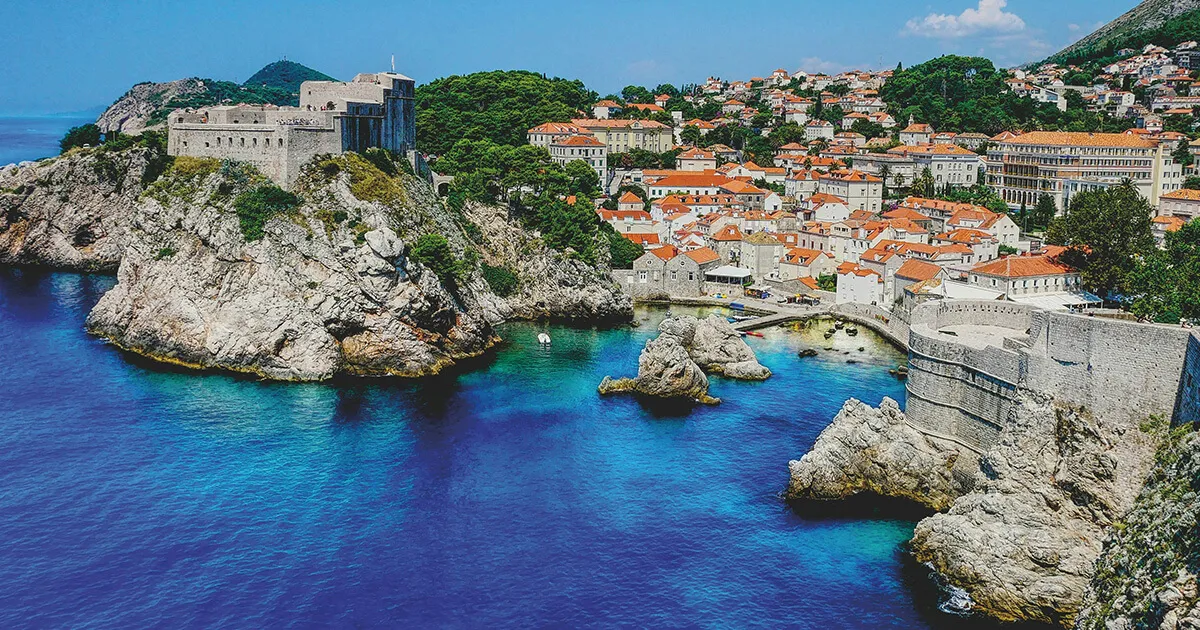
The Adriatic coast is full of people who have owned a place there for years and never got past dobar dan. That works beautifully in a restaurant and collapses the instant an office wants something from you. The vocabulary that gets you through those mornings is small, extremely concrete, and learnable to a confident standard in a matter of weeks.
The reason an app on your phone does not cover it is timing. Translation works on text you can hold still. It does not work on a sentence spoken once, at speed, by somebody who has already moved on to the next person. For that the word has to be in your head before you walk in, which is a different task from looking it up, and a much smaller one than learning Croatian.
That is precisely what Vokabulo is built for. You capture the words your own life puts in front of you and learn them in the context where you will meet them again. Croatian taught straight from English, with over 100 languages available in every combination.
Get Vokabulo, start free.