France has more emergency numbers than most countries, and one feature that matters more than any of them: a doctor decides.
Call the 15 and, after a first exchange with an assistant who takes your address and the basics, you are put through to a médecin régulateur, a physician whose job is to work out on the phone what you need. That goes well beyond taking details and sending a vehicle, and it explains why French emergency calls involve real questions about symptoms.
The numbers, and what each one is for
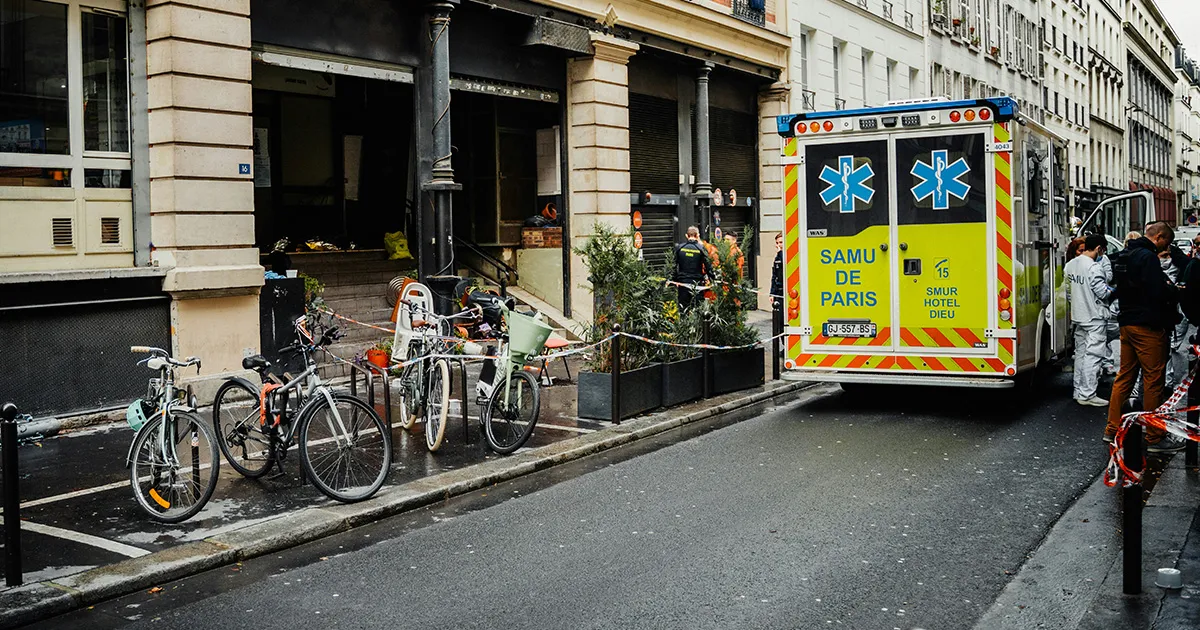
le 15: said le quinze, the SAMU, Service d’aide médicale urgente. The medical emergency line, and the one that puts you through to a regulating doctor. It now also takes non-urgent calls, through the service d’accès aux soins (SAS), when you cannot reach a doctor in the usual way.
le 112: said le cent douze, the European emergency number, which works across the EU from any phone, free and without credit, and passes you to whichever service you need. It is the one to remember if you remember only one. Operators can often help in English, but do not rely on it.
le 18: said le dix-huit, the pompiers, the fire service, who in France also handle a large share of medical rescue, particularly road accidents and anyone who has to be freed or carried out.
le 17: said le dix-sept, the police. Not a medical number.
le 116 117: said cent seize, cent dix-sept, the out-of-hours doctor service, la permanence des soins ambulatoires, for when you need a doctor today, in the evening or at the weekend, and it is not an emergency. It is not yet live in every region; where it is not, the 15 takes these calls. The number is reserved for this service across the EU, and Germany uses it too, as the German article explains.
le 3624: SOS Médecins, a nationwide network of independent doctors who make home visits, widely used in cities and often quicker than the alternatives. Calls cost 15 cents a minute on top of the normal call charge.
le 114: said le cent quatorze, the emergency number for deaf, hard-of-hearing and speech-impaired people, reached by text message, chat, video call or sign language.
What the regulating doctor will ask
Because a clinician is on the line, the questions go further than where you are.
Que se passe-t-il ? What's happening?
Où êtes-vous exactement ? Where exactly are you? Give the address first.
Quel âge a la personne ? How old is the person?
Est-elle consciente ? Is she conscious? Respire-t-elle normalement ? Is she breathing normally?
Depuis quand ? Since when? Regulating doctors pay close attention to when symptoms started, particularly with anything affecting the heart or the brain.
Prend-elle des médicaments ? Does she take any medication?
Ne raccrochez pas. Do not hang up. The doctor ends the call.
The sentences to have ready
J’ai besoin d’une ambulance. I need an ambulance.
L’adresse est … The address is …
Il a une forte douleur dans la poitrine. He has severe chest pain.
Elle a du mal à respirer. She is having difficulty breathing.
Il est inconscient. He is unconscious.
Ça saigne beaucoup. It is bleeding heavily.
Je parle mal français. Parlez-vous anglais ? My French is poor. Do you speak English?
And the word that opens every French conversation, this one included, as the article on the French register trap explains: bonjour. Even on an emergency call, say it first. It takes half a second.
At the hospital
les urgences: the emergency department. Always plural, always with the article.
l'accueil: reception.
le triage / l'accueil et orientation: the sorting on arrival, done by a triage nurse who is now usually called l’infirmier organisateur de l’accueil or IOA. You may still hear the older name, infirmier d’accueil et d’orientation (IAO).
la carte Vitale: your health insurance card, asked for at every stage. Bring it, along with your attestation de droits if the card has not been issued yet.
la mutuelle: your complementary insurance, which covers what the state scheme does not. You will be asked about it.
le compte rendu: the report on your visit. Ask for it before you leave.
l'ordonnance: the prescription.
l'arrêt de travail: the sick note.
The vocabulary of who does what
le médecin traitant: your registered GP and the hub of the French system. Declaring one makes a big difference to how much of your costs are reimbursed, and the full picture is in the article on French healthcare.
le médecin de garde: the on-call doctor, reached through 116 117 where it exists, or through the 15.
la maison médicale de garde: an out-of-hours clinic, where you go to the doctor instead of waiting for one to come to you.
le SMUR: the mobile intensive care unit sent out for serious cases, not to be confused with an ordinary ambulance.
The rule that overrides everything
If you cannot tell which number you need, call 112. It reaches the same network, and nobody will hold it against you. Calling quickly matters far more than picking the theoretically correct number.
Learning it in advance
Save whole sentences. Ambulance on its own is a word on a card. J’ai besoin d’une ambulance, l’adresse est … is something you can say under pressure.
Practise your address aloud in French. French addresses have their own word order and a set of building details (étage, code, interphone, bâtiment) that do not come naturally, and you will be asked for all of them.
Then let spaced repetition keep it fresh. These are twenty phrases you hope never to use, which is exactly the kind of material it is made for.
The short version
15 (le quinze) for a medical emergency, where a doctor decides what happens. 112 (le cent douze) if you are unsure. 116 117 for a doctor today when it is not urgent, where your region has it. 18 for accidents and anything that needs a rescue.
Say bonjour, then the address.
Want the French emergency phrases ready in advance? Put them into Vokabulo. Free to start on iPhone, iPad and in the browser. 🚑